In November 2025, the City of Ukiah planted 270 trees along roughly two miles of the Great Redwood Trail between Cherry Street and Plant Road. The city's own count now puts survival from that planting at 76.30%. That works out to about 206 trees still standing and around 64 lost. City crews planted all of them on public land along a corridor the city maintains.
That figure helps explain the rules for Treekiah, the urban forestry program the city launched on September 24, 2026. The trees are free and the city delivers them. The rest of the program is built so the next round survives at a better rate than the last one, and once a tree is planted, the work of keeping it alive is yours.
Why the Paperwork Comes First
Treekiah is the public name for the city's Climate Resilient Forests project, which started in 2025. It's funded by $1.39 million in competitive grant money through the Inflation Reduction Act and the USDA Forest Service Urban and Community Forestry Program, administered by CAL FIRE. The grant runs through March 2028. When the Mendocino Voice covered the award in October 2024, the plan was for 722 trees.
Urban Forest Manager Aaron Yang explains the program this way:
"Trees are more than landscaping. They are living community infrastructure that can provide shade, cooler public spaces, environmental benefits, and a stronger connection between people and place."
If a tree counts as infrastructure, the city wants to know the site, the person caring for it, and the condition of the ground before a shovel goes in. The application steps reflect that.
The Steps Between You and a Tree
The free-tree application is open to City of Ukiah residents in three census tracts: 06045011600, 06045011501 and 06045011502. Each property address can receive up to three trees a year in 2026 and 2027, depending on how much room the site has. Applicants need to own the property or have the owner's permission. Renters upload written permission and settle with the owner who will care for the tree.
The process runs in this order:
- Apply through the "Apply here" link on the Treekiah StoryMap. The form asks for the planting address, your contact details, an eligibility agreement and a signed waiver.
- Call 811 before your workshop so underground utilities can be located. This step belongs to the property owner.
- Attend the one-hour Planting and Care Workshop, which you must complete before you can receive a tree. The events hub lists it for Wednesday, Oct. 14, at 3:30 p.m.
- Receive your tree. The city delivers it to the address on the application with a watering bag and two stakes. According to the StoryMap, trees usually arrive in 5- to 15-gallon containers and stand 4 to 10 feet tall.
- Plant it yourself or ask for help. If you request planting assistance, the city schedules it and emails you at least two days ahead. Either way, you send photos of the planting site and of the finished planting.
As of today, Oct. 14 is eight days away, and it's the only Planting and Care Workshop on the hub's list. The listings don't name a venue. If you're interested, register early and confirm the location then.
Where the Tree Can Go, and Which Tree You Get
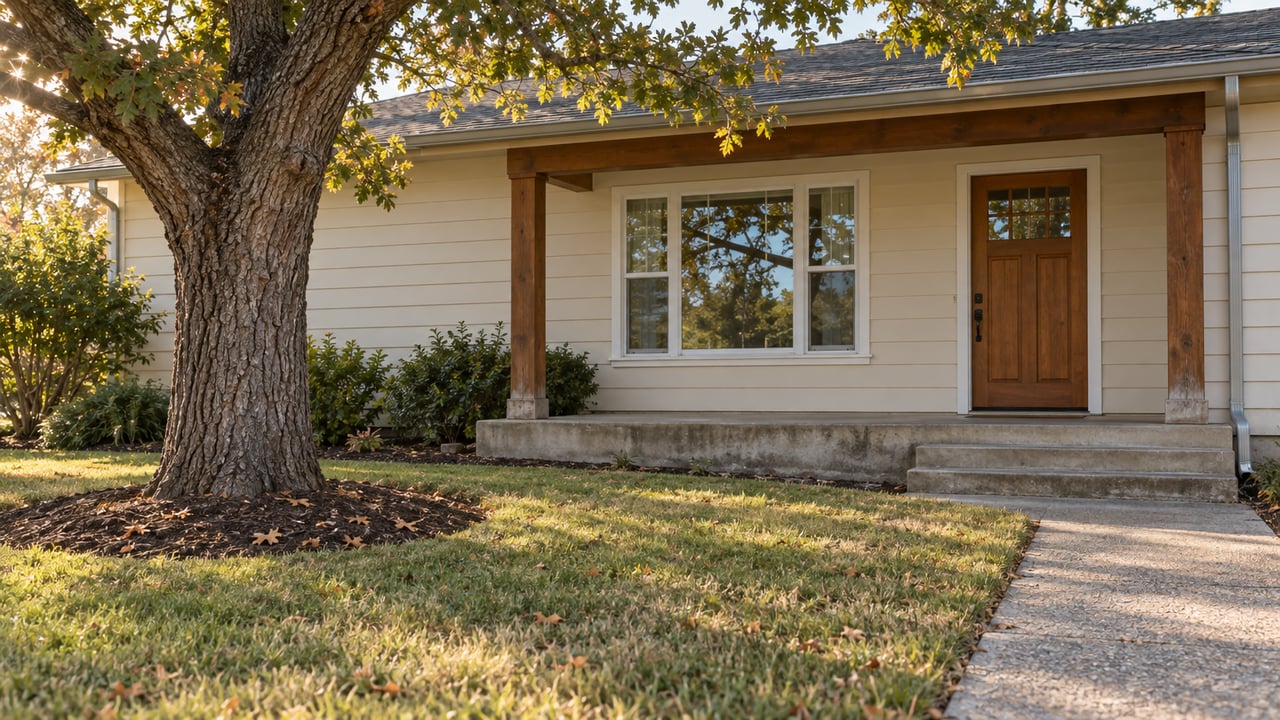
The city asks applicants to think about the public right-of-way. Its guidance names two ideal spots: planting strips between the curb and the sidewalk, and front yards next to the sidewalk that have plenty of room. Street-tree locations must be approved and marked by the city, and the tree has to go in at the address on the application.
You won't get to choose a species. The city selects trees each year based on what wholesale nurseries have available, and this year's list isn't confirmed yet. Applicants can't request a species outside the city's selection. Two limits apply no matter what's on the list:
- Overhead lines: Under power lines, only species that top out around 25 feet can be planted.
- Fruit and nut trees: These are generally excluded from street and park plantings because of their water and maintenance needs, pests and agricultural concerns.
If you're hoping for a backyard plum, this program won't provide it. Its goal is shade over the sidewalk.
Why the Window Is Now
Timing matters as much as the paperwork. The city recommends planting in fall and winter, when roots can establish during the wet months and be readier for Ukiah's hot summers. Its guidance warns that spring and summer plantings often fail. Deliveries happen in fall or winter after the required workshop. A tree planted this season gets one wet winter to grow roots before its first full dry season, which runs March through October 2027.
The Part You Sign Up For
After planting, the property owner handles watering, weeding, mulching and pruning. This is the city's year-by-year watering schedule:
| Year after planting | Dry-season watering guidance |
|---|---|
| Year 1 | 15 gallons every week through the dry season, typically March through October |
| Year 2 | Every two weeks, depending on conditions |
| Year 3 | At least monthly during extended dry periods |
The StoryMap's short FAQ gives a slightly narrower window, April to October for the first three years. The detailed schedule starts in March, so following it covers both versions.
In practice, the free tree comes with about 35 weekly fills of the watering bag in its first year, covering March through October. Then the commitment tapers off. The trail planting is the city's only published survival figure, and it lost close to a quarter of its trees. That's why the program puts so much weight on workshops, photos and seasonal timing.
Ditch Your Lawn, the Bigger Version
The second Treekiah initiative asks for more. Ditch Your Lawn is open to residents in the same three census tracts. It covers lawn conversions of at least 100 square feet per address per year in 2026 and 2027, and renters need the owner's permission. Participants get education, trees supplied and delivered by the city, planting help on request, a watering bag and stakes for each tree, and a small stipend once the work is done.
The application doesn't give a dollar amount and calls the payment a stipend, so it isn't a dollar-for-dollar rebate. To qualify, you attend a one-hour Ditch Your Lawn workshop, prepare and convert the lawn area yourself, and submit before-and-after photos. The workshop is listed for Saturday, Nov. 14, at 10 a.m. In 2024, KZYX and the Mendocino Voice both reported a projected $50,000 allocation for this part of the program. That was the planned total for the initiative, not the amount each household receives.
The Nursery on Spring Street
The newest piece of the program addresses survival from the supply side. At a recent meeting, the Ukiah City Council approved staff pursuing a lease with Ukiah Unified School District for part of the south tennis courts at Pomolita Middle School, 740 N. Spring St., to use as a community tree nursery. The Ukiah Daily Journal reported on Oct. 1 that Council member Doug Crane asked why the city wasn't using land it already owns, such as the Corp Yard, the airport or the wastewater treatment plant.
Yang's answer was shade. He said the mature trees around the courts create "an environment suitable for baby trees." He also said the proposed contract was "not set in stone." In its current form, the district would pay reasonable water charges and the city would agree to use water in a reasonable manner. City Manager Sage Sangiacomo added that the site makes it possible to work with students and teachers. A nursery would let young trees grow on in local shade before they're planted in a parkway strip.
The program has its critics. Mark Scaramella's Oct. 4 "Another Voice" column in the Ukiah Daily Journal questioned its costs and cited a 755-tree target. With 270 trees planted on the trail last November and a grant that ends in March 2028, the next two planting seasons will carry most of the remaining work.
One comment on the StoryMap describes what the city is aiming for: "I would love to see a state street full of shade. A railtrail full of shade for long relaxing walks with family and friends." For each tree, that depends on someone filling the watering bag every week from March through October 2027.
A new street tree changes a property for decades. It affects curb appeal, summer shade on the front windows and where the sprinklers go. If you're deciding whether a parkway tree or a lawn conversion fits your plans for your Ukiah home, I'm happy to talk it through. Diane Pennington has spent a career helping Mendocino County owners think about their land over the long run. Let's Connect.
This article is general information, not legal, tax or financial advice. Consult a qualified professional about your situation.
